Tight Staircase Moves: Case Study on Mottingham Flats
Posted on 26/06/2026
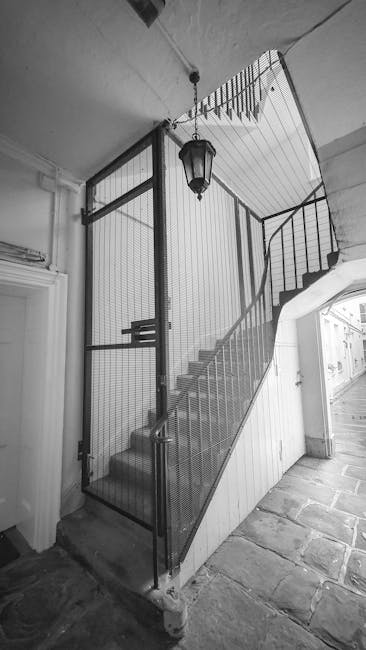
Anyone who has tried to carry a wardrobe, sofa, bed base, or even a stubborn fridge through a narrow stairwell knows the feeling: the room looks easy enough, the staircase looks ordinary, and then the angle bites back. Tight Staircase Moves: Case Study on Mottingham Flats looks at the real challenge behind those awkward apartment moves where width, turns, headroom, and timing all matter at once. In Mottingham, where flats can come with compact staircases, shared entrances, and limited landing space, the moving day plan has to be smarter than usual. This article breaks down what makes these moves tricky, how professionals approach them, and how to avoid the sort of mistakes that turn a straightforward relocation into a long, sweaty puzzle. To be fair, that puzzle is easier to solve when you know what to look for.
Why Tight Staircase Moves Matter in Mottingham Flats
Tight staircase moves matter because they shape almost every other part of the relocation. If the staircase is too narrow for a mattress to turn, too steep for a bulky cabinet to pivot, or too awkward for two people to safely coordinate, then even a small move can snowball into delays, scratches, and unnecessary strain. In flat blocks, that risk is multiplied by communal areas, neighbours passing through, and the simple fact that there is nowhere to hide a misjudged lift.
In Mottingham, flats often bring together several moving-day pressure points at once: restricted parking, shared hallways, shorter landings, and stairs that were never designed with large modern furniture in mind. That does not mean the move is impossible. It means the move needs a plan. A good one. Not a vague "we'll see on the day" plan. The kind that starts with measurements, route checks, and a realistic look at what can be dismantled before anyone lifts a thing.
It also matters because staircase damage is expensive in more ways than one. You may damage the item, mark the wall, chip a bannister, or strain a shoulder trying to twist too hard in a confined space. If you want a broader sense of preparation around the whole moving process, the guides on decluttering before the move and streamlining packing when changing homes fit neatly alongside this topic, because fewer items and smarter packing make stair handling much easier.
And there is another reason these moves deserve attention: confidence. Once people see how carefully a tight stairwell must be handled, they stop treating moving day like a brute-force job. That alone changes the outcome.
How Tight Staircase Moves: Case Study on Mottingham Flats Works
At a practical level, a tight staircase move is a controlled sequence of assessment, preparation, protection, lifting, and positioning. The goal is not to muscle everything upward. The goal is to move each item through the route with the least possible friction, turning, and risk. In a Mottingham flat, that usually starts before the van even arrives.
1. Route assessment comes first
Professionals look at the stairs, landings, bannisters, door swings, ceiling height, and any awkward bends. They also check whether the item can be moved upright, on its side, or only after partial dismantling. A sofa that looks "fine" in the lounge can become a geometry problem on the first landing. Funny how that happens, isn't it?
2. The item is prepared for the route
Preparation can mean removing legs, wrapping corners, securing drawers, or taking a bed frame apart. For awkward household pieces, guidance like safe handling of beds and mattresses during a move and expert sofa storage tips is useful because both beds and sofas tend to be oversized, soft-edged, and surprisingly hard to steer in a staircase.
3. Protection is added to the building and the item
Blankets, covers, corner protectors, and floor runners help reduce scuffs and friction. In narrow communal spaces, even a tiny knock can leave a mark, so protection is not a luxury. It is basic respect for the property and for everyone else using the building.
4. The team uses coordinated lifting and turning
For large items, the main skill is often not lifting harder but moving in sync. One person guides the angle while another controls the lower end or steadies the load. The idea is to keep the item close to the body, reduce awkward twisting, and communicate before each turn. If you want a more technical look at the body mechanics involved, the articles on kinetic lifting and lifting heavy alone explain why balance, foot placement, and load awareness matter so much.
5. The item is handed off at the top or bottom
Those final moments are often the most delicate. The last few steps can force a change in grip, and the landing can create a need to pivot in a very tight arc. This is where calm communication matters more than speed. Rushing here is where people get stuck, literally and metaphorically.
In practice, good stair moves feel almost slow. Not inefficiently slow. Deliberate. You notice the pauses, the counting, the small corrections. That is usually a good sign.
Key Benefits and Practical Advantages
There is a reason careful stair planning pays off. The benefits are not just about avoiding damage. They touch time, safety, and overall stress levels too.
- Lower risk of damage: Measured movement reduces wall scuffs, corner dings, and trapped furniture.
- Better personal safety: Proper handling cuts the chances of slips, jolts, and back strain.
- Faster decision-making: If you know the route, you can decide quickly whether to dismantle, tilt, or carry.
- Less neighbour disruption: Efficient moves keep communal areas clear for shorter periods.
- Cleaner handover: A tidy move-out matters, especially in flats where final checks are common.
There is also a psychological benefit that gets overlooked. Once the hardest part of the building access has been handled properly, everything else feels more manageable. Packing boxes? Fine. Final cleaning? Manageable. Last-minute kitchen bits? Annoying, yes, but no longer overwhelming.
For many flat moves, that reassurance is worth a lot. People are not just paying for transport; they are paying for calm, and a reduction in the kind of stress that makes you forget where the kettle went.
Who This Is For and When It Makes Sense
This approach makes sense for anyone moving in or out of a flat with limited staircase access, but it is especially useful in the following situations:
- One-bedroom and two-bedroom flats with narrow internal stairs
- Shared buildings where access windows are tight
- Homes with large or awkward furniture that cannot simply be carried upright
- Moves involving students, sharers, or renters with limited time on site
- Situations where parking is awkward and every minute at the entrance counts
It is also a good fit for people who do not want to gamble on "winging it." Let's be honest, some items look deceptively small until the staircase says otherwise. A compact armchair can become a real nuisance if the turn is sharper than expected. A mirror or desk can be even worse because shape, not weight, becomes the issue.
In our experience, a tight staircase move is most sensible when one of these is true: the route is awkward, the item is fragile, or the time window is narrow. If all three are true, the move benefits from professional handling rather than trial and error.
Step-by-Step Guidance
Here is a practical way to approach a Mottingham flat move with tight stairs. This is not about overplanning. It is about avoiding the classic "we'll sort it on the day" disaster.
- Measure the item and the route. Check width, height, depth, and turning space. If possible, measure the staircase width, landings, and any doors that cut into the route.
- Identify removable parts. Legs, shelves, handles, cushions, and headboards often make the difference between a fit and a fail.
- Protect both ends of the route. Use covers for furniture and protection on walls or floors where needed.
- Pack and label by priority. Keep the route clear of boxes so the team is not stepping around clutter while carrying awkward loads. The guide to packing efficiently when changing homes is handy here.
- Decide the moving method in advance. Upright carry, tilt carry, dismantle-and-rebuild, or temporary storage may all be appropriate depending on the item.
- Clear the stairwell and landing. Remove anything that can catch feet or snag a corner. Shoes, mats, bins, and loose cables are all troublemakers.
- Use coordinated lifting. One person leads, another supports. Communicate before every turn, pause, and set-down.
- Check the item after movement. Look for scuffs, loose fittings, or pressure marks before continuing with the next item.
A small but useful detail: if the move involves a bed frame, wardrobe, or sofa, the best route is often the one that looks the least dramatic. Shorter does not always mean easier. Sometimes the main staircase is better than a side path with odd angles and a too-low ceiling. That's the sort of thing people only learn once, usually the hard way.
Expert Tips for Better Results
Here are the practical habits that tend to separate a smooth move from a stressful one.
Start with the awkwardest item
Do not save the hardest object for last. If the staircase is going to be a bottleneck, you want to discover the problem while you still have energy and daylight. A fresh brain can solve a route issue faster than a tired one. Simple, but true.
Keep the staircase clear of guesswork
The person at the bottom should not be asking, "Do you think it will fit?" while the item is already half-turned. Decide the angle before the lift. Then lift. Then move. Small difference, big impact.
Use more padding than you think you need
In flats, walls are often close enough that even a tiny sway leaves a mark. Extra padding on corners, rails, and furniture edges is rarely wasted.
Be realistic about weight distribution
A box can be awkward because it is dense. A wardrobe can be awkward because it is tall. A mattress can be awkward because it flexes. Different awkward, same problem. Treat each item on its own terms.
Leave room for a reset
If a turn is not working, stop and reset. Do not try to "force" the angle in one go. That is where shoulders get strained and stair rails get clipped.
If you are dealing with a same-day deadline or a quick turnaround, the article on short-notice SE9 moves is a useful companion read. Time pressure changes the way you should prioritise each stage, and not always in obvious ways.

Common Mistakes to Avoid
There are a few errors that show up again and again in tight staircase jobs. Avoiding them is often half the battle.
- Skipping measurements: "It looks like it fits" is not a measurement.
- Leaving furniture assembled: Larger items are much harder to angle safely.
- Ignoring the landing space: A staircase may seem fine until the turn at the top proves otherwise.
- Overpacking boxes: Heavy boxes become dangerous on stairs very quickly.
- Rushing the final turn: The landing is where patience pays off.
- Forgetting building etiquette: Communal areas should be kept clear and tidy.
- Not planning parking: If the van is far away, every extra trip eats time and energy.
One of the less obvious mistakes is underestimating emotional fatigue. People get one large item stuck in the stairwell and suddenly their whole day feels off. That's human. But it is also why a calm, methodical plan matters. You are not just moving furniture; you are preserving momentum.
Tools, Resources and Recommendations
You do not need a warehouse of specialist kit for every flat move, but the right basics make a meaningful difference.
| Tool or resource | Why it helps | Best used for |
|---|---|---|
| Furniture blankets | Protects edges and surfaces from scuffs | Sofas, wardrobes, bedside units |
| Straps or grips | Improves control on stairs | Heavy items and long carries |
| Corner protectors | Helps shield walls and furniture | Narrow landings and tight turns |
| Labels and markers | Speeds up setup and unpacking | Box sorting and room placement |
| Dismantling tools | Makes bulky items easier to manoeuvre | Beds, shelves, tables, flat-pack furniture |
For moving support around the wider process, the services overview gives a sense of how different moving needs can be handled, while furniture removals in Mottingham is a useful option when the issue is specifically bulky household items rather than a full home move.
If your move involves waiting between properties or needing a temporary holding plan, storage can be a sensible release valve. The page on storage in Mottingham is relevant for that sort of situation. Not glamorous, but genuinely useful.
And if your moving day is tied to a booking decision, the page on pricing and quotes is the natural next stop for planning the budget side without getting lost in jargon.
Law, Compliance, Standards, or Best Practice
For a stair move in a flat, the main compliance concerns are practical rather than highly technical. Still, they matter. Building rules, shared access arrangements, parking restrictions, and basic duty of care all shape how the move should be handled. In many London flats, it is simply best practice to keep communal areas clear, avoid damage to shared property, and be considerate about noise and timing.
If the building has a managing agent or leaseholder instructions, those should be respected. Likewise, if parking near the block is limited, it is wise to plan for the vehicle's position in advance. Local moving pages such as Mottingham Road removals parking access and costs, the Mottingham Lane access guide, and parking suspension permits explained are particularly relevant when access is tight outside as well as inside.
Where council permission or local waste rules affect the move, the useful thing is to check early rather than assume. The articles on how council permits affect moving day and bulky waste rules for Mottingham homes can help with that planning mindset. It is not about memorising every rule. It is about not leaving it to the last minute.
Safety policy and insurance matter too. If you are comparing providers or want reassurance about how handling is approached, the pages on insurance and safety and health and safety policy are worth reading before you book. A good mover should be able to explain how they reduce risk without sounding vague or overly slick.
Options, Methods, or Comparison Table
Not every tight staircase move needs the same method. Here is a simple comparison to help you think through the options.
| Method | Best for | Pros | Trade-offs |
|---|---|---|---|
| Carry as-is | Smaller, lighter items | Fast and straightforward | Not suitable for awkward shapes |
| Dismantle first | Beds, wardrobes, tables | Easier on stairs, safer turns | Needs tools and reassembly time |
| Two-person guided lift | Medium-weight furniture | Controlled and flexible | Needs good communication |
| Temporary storage then move later | Moves with timing or access problems | Reduces pressure on move day | Extra handling step |
The most practical answer is rarely "one method for everything." A flat move may use all four approaches in a single day. That is normal. What matters is choosing the method that fits the item and the staircase, rather than trying to force every object into the same pattern.
Case Study or Real-World Example
Here is a realistic example based on a typical Mottingham flat move. A couple was leaving a second-floor apartment with a narrow internal staircase and a sharp turn halfway up. Their largest items were a double bed frame, a sofa, and a tall chest of drawers. At first glance, the move looked simple enough. But once the team walked the route, it became clear that the sofa would not make the turn assembled.
The solution was straightforward, though not especially exciting: the sofa legs came off, the bed frame was dismantled, and the chest of drawers was emptied before handling. The stairwell was protected with coverings, and boxes were staged so no one had to step over clutter while carrying a long item. The whole thing went from "this could be messy" to "this is manageable" in about twenty minutes of planning.
What made the biggest difference was not speed. It was the decision to stop and assess before the carrying began. The team also kept communication tight, with one person calling the turns and another watching the edge clearance. There was a moment, near the landing, where the sofa needed a slightly different tilt than expected. Nothing dramatic. Just a tiny correction. That tiny correction probably saved a wall mark.
This kind of move is exactly why tight staircase work deserves its own approach. A flat move is not just a smaller house move. It often requires more precision, not less.
Practical Checklist
Use this checklist before a tight staircase move in a Mottingham flat. It keeps things simple when the day itself gets busy.
- Measure the staircase, landings, and doors.
- Measure the largest items, including any removable parts.
- Confirm whether furniture can be dismantled.
- Clear the route of shoes, mats, bins, and loose items.
- Protect walls, bannisters, floors, and corners where needed.
- Pack boxes to sensible weights, not heroic ones.
- Label boxes clearly for quick room placement.
- Plan parking and van access before move day.
- Decide which items need two-person handling.
- Keep a small tool kit close at hand.
- Allow extra time for awkward turns or resets.
- Check the property for damage before you leave.
If you are still in the planning stage, the guide to thorough cleaning strategies before moving out is a strong companion piece, especially for renters who need to hand back a flat in decent shape. A staircase move and a clean handover often go hand in hand, which is not glamorous but absolutely true.
Conclusion
Tight Staircase Moves: Case Study on Mottingham Flats shows that a successful flat move is rarely about strength alone. It is about route awareness, sensible preparation, and the discipline to slow down at the right moments. Narrow stairs, awkward landings, and shared entrances do not have to derail the day, but they do demand respect.
When you treat the staircase as part of the move plan, not just a corridor in the middle of it, everything becomes easier: the lifting, the timing, the protection of the property, and your own peace of mind. That is the real win. Not perfection. Just a move that feels controlled, tidy, and finished without drama.
For anyone facing a similar flat move in Mottingham, the smartest next step is to prepare early, measure properly, and choose support that understands the building as well as the furniture. Small steps. Careful steps. They add up.
Get a free quote today and see how much you can save.